Does AMP-8 really create too much work for too few hydraulic modellers?
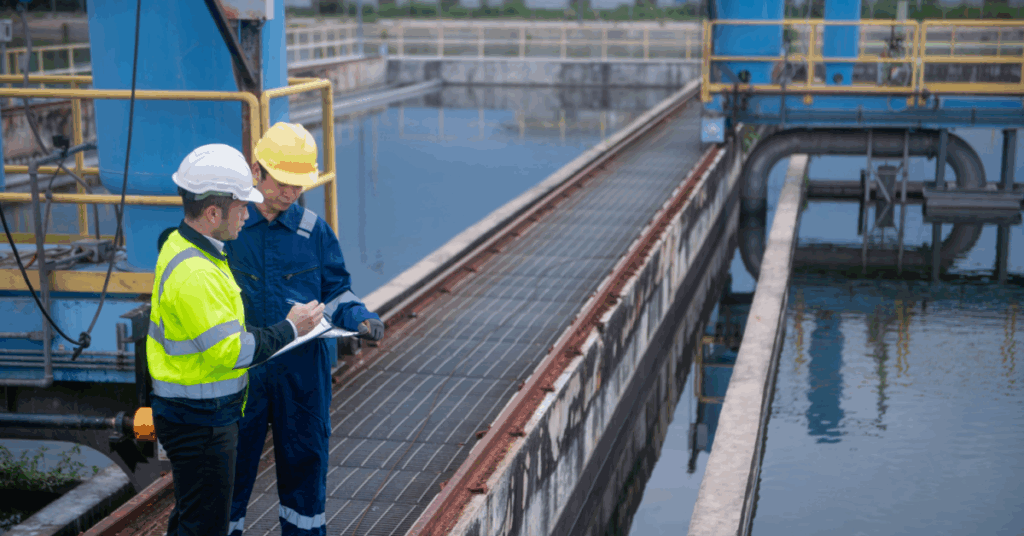
As AMP-8 gets underway, spill reduction ambitions are already set and the focus has shifted to immediate delivery under rapidly shrinking timescales. Regulatory targets linked to 2030 are now close enough to demand action in modelling outputs today. For many water companies, this shift has transformed spill assessment into one of the most demanding parts of their workload.
At the same time, modelling teams are being asked to do more than ever before. More scenarios, more verification, more long-duration simulations and more frequent updates to long-term plans are all landing on a profession that was already stretched thin even before AMP-8 kicked in. This has resulted in a growing sense that the scale of AMP-8 work is outpacing the capacity available to deliver it across the UK water industry.
The scale of AMP-8 expectations
AMP-8 places heavy emphasis on environmental outcomes, particularly around storm overflows and spill reduction. Combined sewer overflow (CSO) spill performance improvements are landing as immediate regulatory requirements. Targets tied to 2030 mean that water companies need evidence-backed plans and interventions now.
This has a direct impact on modelling demand. Spill reduction assessments often rely on long-duration simulations, typically covering 10 year periods, which takes time to run and interpret. Each additional scenario multiplies that effort. Although much of the core AMP-8 modelling has now been completed, there has been significant model verification work required to improve the accuracy of CSO spill prediction. Many existing models were not originally focused on long-term spill behaviour, so additional components (such as ground infiltration representations) need to be introduced and tested.
This verification typically requires assessment against long-duration simulations aligned to EDM records, often covering three years or more. Aside from runtime, these simulations also produce volumes of data that are difficult to review manually in detail, meaning assessment is frequently reduced to summary metrics or individual spill events.
Alongside this, water companies must still maintain service levels, accommodate housing growth and factor in climate change allowances. Instead, new AMP-8 requirements stack on top of existing responsibilities with AMP-9 already on the horizon shaping future expectations
A growing workload without matching capacity
The major step-change in AMP-8 modelling demand, which is mainly driven by larger investment volumes and expanded requirements (e.g., storm overflow programmes, network and environmental modelling), can be attributed to:
- The need to test and compare more options to justify investment decisions
- More frequent updates to long-term plans such as Drainage and Wastewater Management Plans (DWMPs) which sit alongside AMP-8 delivery and compete for the same modelling resource. These are now reviewed annually rather than every few years
- Higher expectations for model accuracy, particularly for CSO spill prediction
- Increased use of real-world rainfall representations rather than simplified design events
Recruitment alone has not solved this problem. Senior hydraulic modellers are scarce, and training new staff takes years rather than months. Water companies find themselves competing for the same limited pool of expertise, which often results in people moving between companies rather than increasing overall capacity across the sector.
The manual verification and judgement challenge
CSO spill reduction modelling places additional strain on manual verification processes. Sensors and monitors provide large volumes of data, but that data is rarely clean or complete. Instruments fail, readings drift and local geological or meteorological conditions introduce ambiguity. Making sense of this requires professional judgement built on experience.
Manual verification remains highly labour intensive. Traditional approaches involve adjusting parameters one by one, working through flow monitors sequentially and carefully managing upstream and downstream dependencies. Each change can have knock-on effects elsewhere in the network. The process can take months for a single catchment, even before future growth or climate scenarios are applied.
To make matters worse, the judgement-heavy elements still depend on limited senior expertise. It relies on deep understanding of network behaviour and physical plausibility. As a result, the most experienced (and scarce in number) modellers spend a large proportion of their time on repetitive, process-driven tasks rather than analysis or strategic thinking.
Long-term planning adds further pressure
DWMP requirements amplify these challenges. Models must be kept up to date with new development data and infrastructure changes. Over-predicting future needs risks unnecessary spend; under-predicting risks non-compliance and scheme failure. Both outcomes have already caused difficulties in earlier AMP cycles.
Annual DWMP reviews mean that model maintenance has become a continuous operational burden. Each update requires data to be sourced from multiple systems, cleaned, standardised and applied consistently. Doing this manually across dozens or hundreds of catchments stretches teams even further.
Why some organisations are rethinking how modelling is delivered
Faced with rising workloads and fixed capacity, many teams are beginning to question whether traditional, manual modelling approaches can scale to meet AMP-8 demands. Increasingly, attention is turning to automating modelling systems to manage large volumes of scenarios within a single, governed framework. In practice, this shift is being driven by two key capabilities:
- Automating repetitive tasks through standardised, audited processes, often by developing scripts that replicate existing procedural instructions currently being executed manually.
- Applying optimisation techniques to support and accelerate iterative model calibration and solution design, allowing engineers to focus on defining the problems to be solved and analysing results rather than repeatedly running and adjusting models by hand.
By structuring and automating different parts, they aim to allow modellers to review far more scenarios in the same amount of time without jeopardising transparency and engineering control.
Capacity, confidence and delivery under AMP-8
AMP-8 has intensified the pressure on hydraulic modelling teams. Spill reduction targets, long-duration simulations, stricter verification expectations and annual DWMP updates have combined to create workloads that many organisations struggle to resource. With limited availability of senior expertise, the challenge is no longer funding alone, but delivery capacity to meet regulatory targets.
So, does AMP-8 create too much work for too few modellers? The answer lies in understanding the power of optimisation platforms such as Siemens HEEDS. When implemented with proper engineering oversight, it is a powerful tool water companies can deploy to increase individual modeller productivity and keep pace with AMP-8 requirements and position themselves well for AMP-9.