How to optimise sewer network design to reduce CSO spills
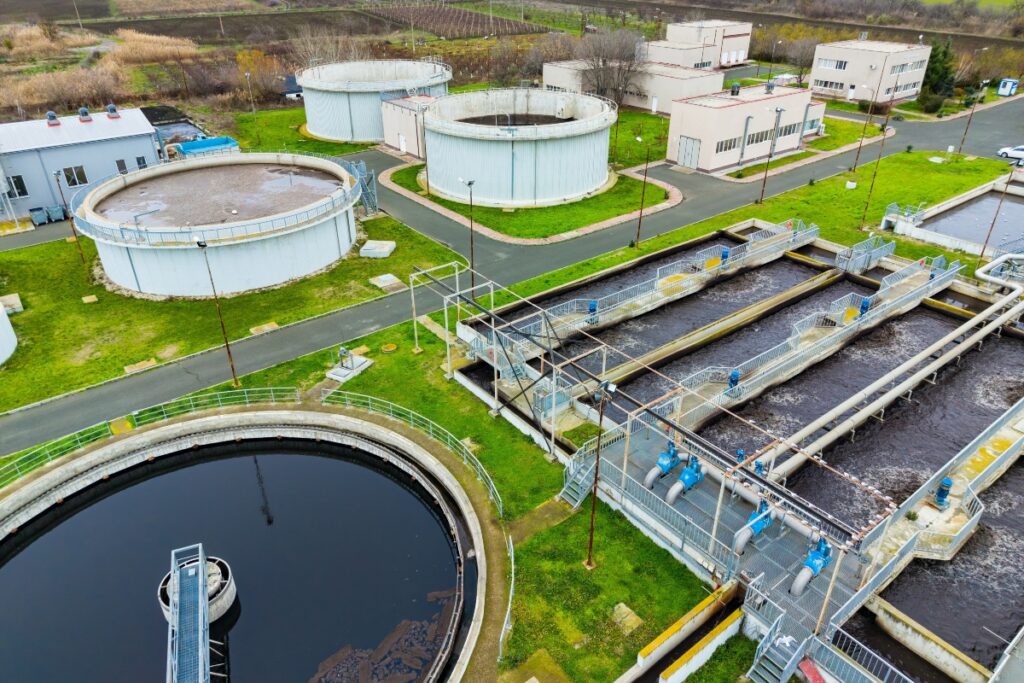
Combined Sewer Overflows are under intense scrutiny across the UK water sector. Water companies need to reduce spill frequency and duration, demonstrate progress under AMP-8 and provide clear evidence that planned interventions will deliver measurable environmental improvements.
For water modellers, this creates a complex design challenge. CSO spills are shaped by catchment-wide interactions between rainfall, runoff, infiltration, storage, conveyance, control structures, downstream constraints and future growth. A change made in one part of the network can influence performance elsewhere, sometimes in unexpected ways.
Optimising sewer network design for CSO reduction starts with a wider view of how the catchment behaves. Teams need to understand the model, define the performance problem clearly and compare intervention options in a way that accounts for hydraulic impact, capital cost and long-term resilience.
Why CSO reduction is difficult to design manually
Traditional modelling approaches rely heavily on engineering judgement to identify and refine a potential intervention, run a simulation, review the outputs and adjust the design. While this expertise is essential, the number of possible asset combinations, operating conditions and future scenarios can quickly become too large to evaluate manually. As a result, designs are often based on a relatively small number of tested options, increasing the risk that more effective or lower-cost solutions remain unexplored. A team may need to assess interventions such as:
- Pipe upgrades
- Pump upgrades
- Storage
- Flow controls
- Real-time control strategies
- SuDS
- Surface water separation
- Strategic diversions
In practice, manual solution development often happens one issue at a time: one CSO, one area of flooding or one local constraint. That can make it difficult to understand the catchment as a whole. A local solution may reduce spills at one location while increasing pressure downstream, or it may need to be revisited once the next part of the network is assessed.
Each option may perform differently depending on where it is applied, how it is sized and which other interventions are included. Manual approaches usually test only a small part of that design space. This means teams may find a workable option without knowing whether a stronger cost-performance combination remains unexplored. That uncertainty can lead to design churn when a proposed scheme is costed, reviewed and sent back for further modelling.
Start with a model that is fit for purpose
Before any CSO intervention can be assessed confidently, the baseline model needs to be suitable for the decision being made.
This is especially important for spill prediction. Many historic models were developed to satisfy earlier regulatory requirements, where the level of accuracy needed for spill assessment was lower than it is today. Modern CSO assessment requires models to reproduce seasonal variation and predict annual spill frequencies that closely match observed performance.
Further refinement may be needed to represent the factors that drive spill behaviour. For calibration, this often means improving runoff response, rainfall-dependent infiltration and groundwater infiltration, particularly where models have been verified against short monitoring periods. For solution design, teams also need confidence in the hydraulic setup around CSOs, including pipe layouts, asset levels, weirs, screens, pump control logic and downstream controls.
If the model cannot reproduce observed spill frequencies or represent the factors driving those spills, solution design becomes less reliable. A scheme may appear to reduce spills in the model, but perform differently in practice if the model is correcting the symptom rather than the root cause.
In contrast, where auto-calibration is used, it should support and accelerate the calibration part of verification. It does not replace verification or engineering judgement. Engineers still define acceptable parameter ranges, review the outputs and decide whether the model is fit for the decision it needs to support.
What does “CSO reduction” actually mean?
CSO reduction can mean reducing spill frequency, spill duration, spill volume, environmental impact or a combination of these outcomes. The most appropriate solution depends on clearly defining the objectives and constraints before options are developed or optimisation begins. This typically includes:
- which CSOs are being targeted
- which performance metrics matter most
- which rainfall periods or long-duration simulations are required
- which future growth and climate scenarios need to be considered
- which constraints affect buildability, operation and cost
Well-defined objectives and constraints keeps the design process focused. It also creates a clearer evidence trail for internal governance and regulatory scrutiny.
Look beyond isolated interventions
CSO spill reduction often requires combinations of interventions rather than single-asset fixes.
Storage can attenuate flows and reduce spill frequency, but it may be expensive or constrained by space. Pipe upgrades can increase conveyance, but they may transfer pressure downstream. Flow controls and real-time control strategies can improve how existing capacity is used. SuDS and surface water separation can reduce runoff entering the sewer network, but their effect depends on location, scale and catchment characteristics.
The challenge is to understand how interventions perform together. A catchment-level approach allows modellers to compare combinations of options and identify where interventions reinforce one another. It also helps avoid local solutions that appear effective in isolation but weaken performance elsewhere in the network.
Compare cost and performance together
CSO reduction schemes need to be technically effective and commercially defensible. Under AMP-8, water companies need to show that proposed investments are supported by clear evidence and represent good value. Instead of asking whether one design can reduce spills, teams need to understand:
- what different levels of investment can achieve
- where extra spend creates meaningful benefit
- where diminishing returns begin
- which interventions appear consistently in strong designs
- which options carry performance or delivery risk
These facts help modellers and decision-makers move from single-scheme review to structured option comparison. They also reduce the likelihood of repeated design churn after costing or capital review.
Use optimisation to explore more of the design space
Optimisation-led modelling gives teams a more systematic way to search for strong intervention combinations.
Rather than developing one candidate solution at a time, optimisation-led modelling searches the design space systematically. Efficient algorithms explore intervention combinations against defined objectives and constraints, helping teams identify strong cost-performance options without relying on repeated manual design iterations.
For CSO reduction, this can help teams compare grey infrastructure, green infrastructure and operational strategies across a wider catchment context. It also supports clearer conversations between modelling teams, asset planners, capital delivery teams and senior decision-makers.
This gives teams greater confidence that the selected option is close to the best available balance of cost, spill reduction and delivery risk within the limits of the problem they have defined.
Turn modelling outputs into decision evidence
Large CSO studies generate large volumes of data. Long-duration simulations, multiple spill metrics, future scenarios and intervention combinations can quickly produce more information than teams can review manually in detail.
Visual outputs help turn that information into evidence. Cost-performance charts, ranked option tables, heatmaps and scenario comparisons can show which interventions perform well, where trade-offs exist and which options remain robust under different assumptions.
This matters because CSO reduction decisions need to be explained. Teams need to show what was tested, which assumptions were used, how options were compared and why a preferred scheme was selected.
A stronger route to CSO reduction
Optimising sewer network design for CSO reduction depends on understanding the catchment, starting from a fit-for-purpose model and comparing intervention combinations systematically.
Manual modelling approaches will continue to support CSO planning, but they limit how much of the design space can be explored within available time and resource. A more systematic approach helps teams identify stronger cost-performance options, reduce rework and produce clearer evidence for investment decisions.
HEEDS, implemented by STRIDE for the water sector, supports this approach by automating repeatable modelling procedures, applying optimisation to intervention design and turning large simulation datasets into clear cost-performance evidence. This gives modelling teams a clearer way to design CSO reduction schemes that are technically robust, commercially defensible and aligned with AMP-8 delivery expectations.